Five miles south-west of Leeds city centre stands Morley — the largest town in the borough after Leeds itself, and a place that has never thought of itself as a suburb. Morley is built on seven hills, like Rome: Scatcherd Hill, Dawson Hill, Daisy Hill, Chapel Hill, Hunger Hill, Troy Hill and Banks Hill. Its old borough motto says everything about how it grew: Industria Omnia Vincit — “Industry conquers all”.
Morley today
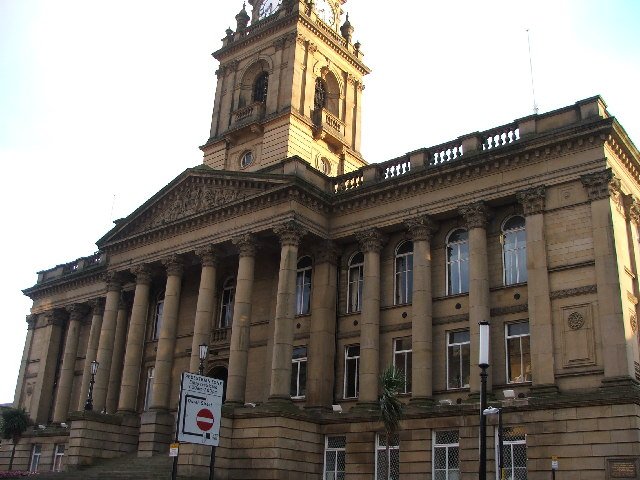
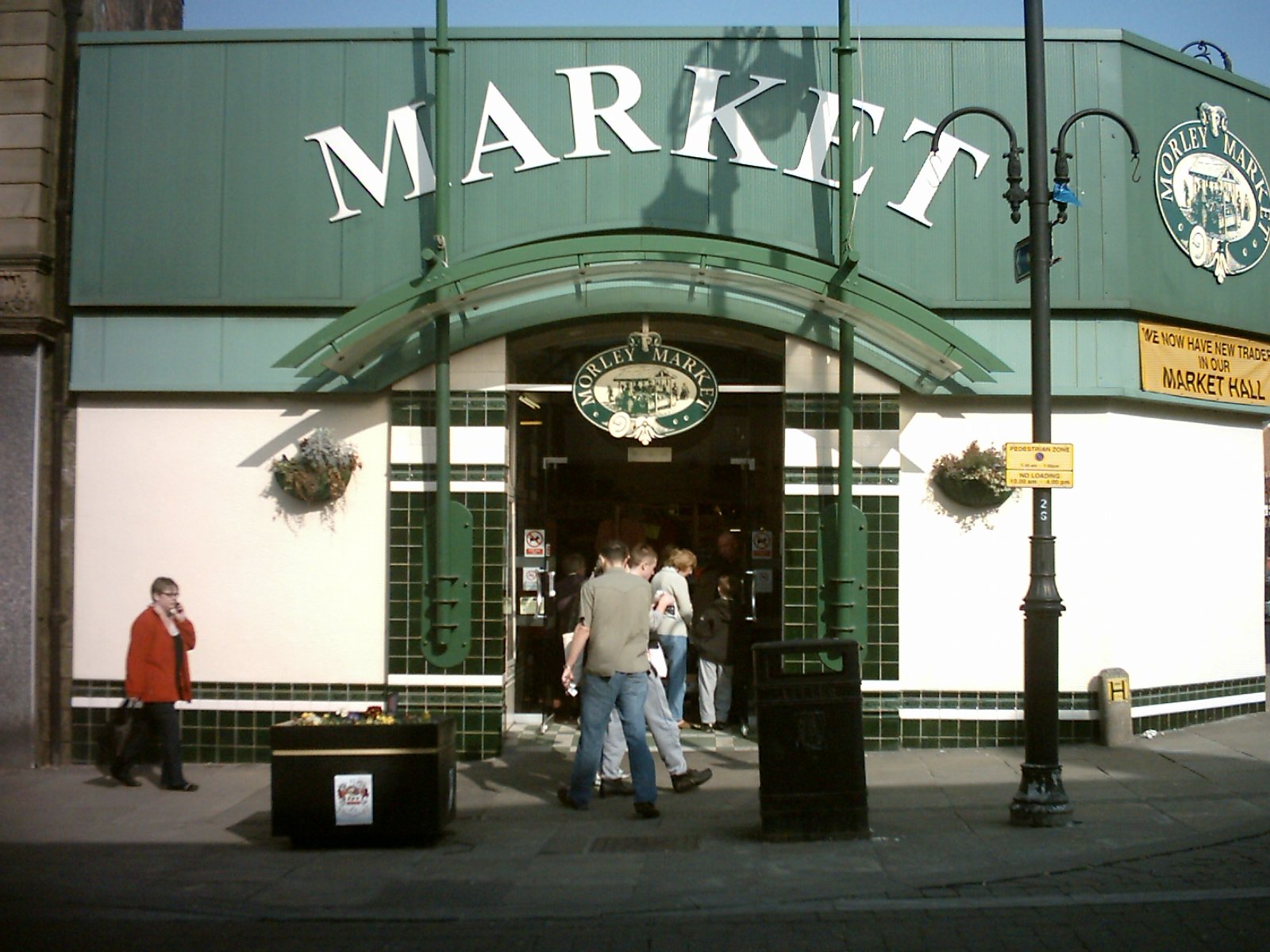
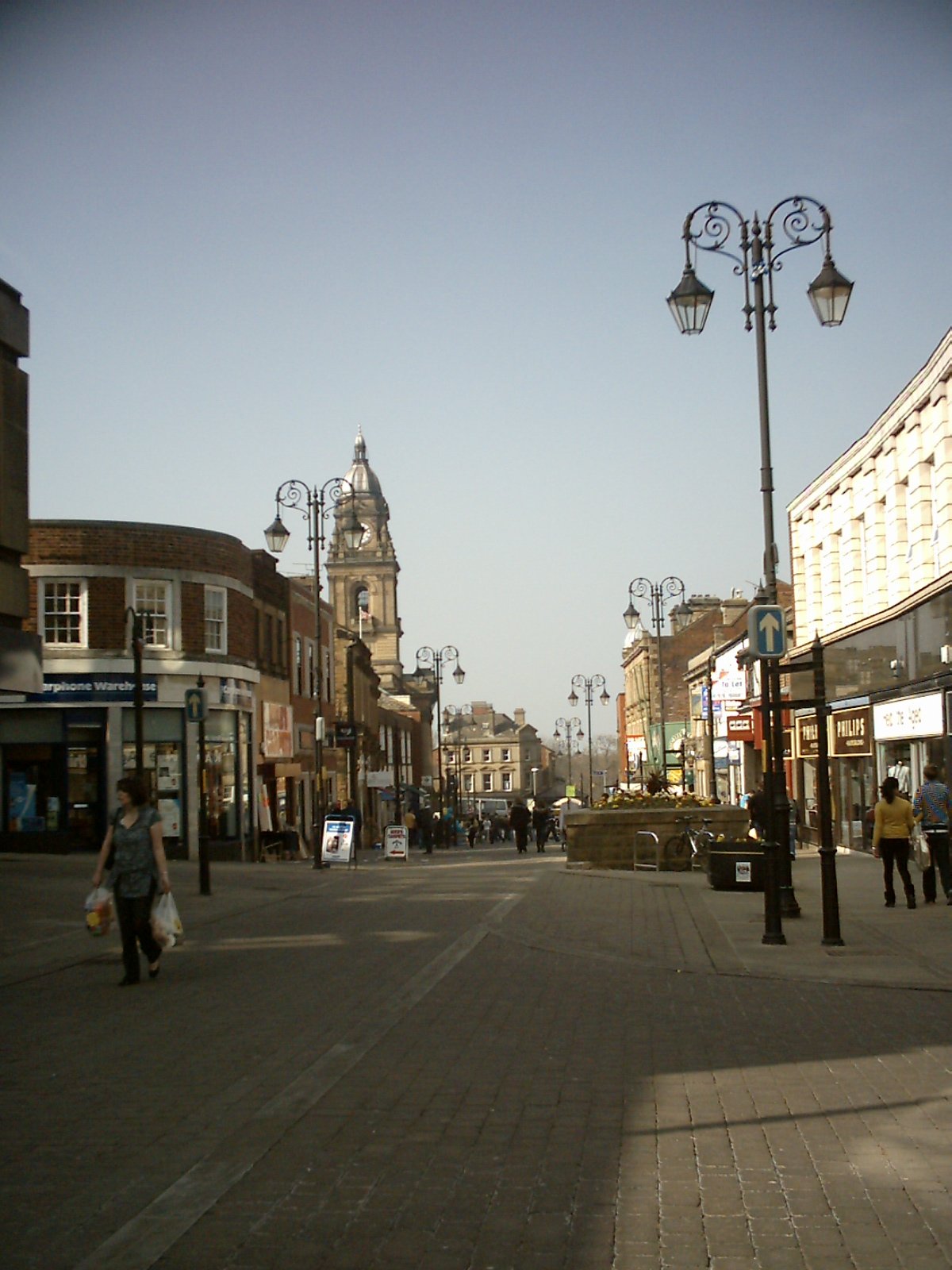
The civil parish of Morley — the town plus its surrounding settlements — had a population of 44,440 at the 2011 census, with about 27,700 in the town itself. Its heart is still the old market-town centre: pedestrianised Queen Street, the indoor market, the library and the Town Hall, which now hosts concerts, school performances and even television filming (Emmerdale and Heartbeat have both used its old magistrates’ court).
Morley holds one of the largest St George’s Day parades in England and has been called “the most patriotic town in England”. It has been twinned with Siegen in Germany since 1966. On Queen Street stands a statue of the comedian Ernie Wise — not born here (he was a Bramley lad), but as a boy of twelve he won a talent contest at Morley’s Pavilion Theatre; his widow Doreen unveiled the statue in 2010.
2010s – 2020s · Fire, torch and a new beginning
In 2010 a fire gutted St Mary in the Wood, the 1878 church on Troy Road whose spire is visible across the town. The congregation moved out and the ruin stood empty for years — but the spire survived, and the listed building is now being converted into the Morley Learning and Skills Centre, run by Leeds City College and due to open in late 2026. In June 2012 the Olympic Torch paused at the Morley Academy on its way to the London Games.
1974 · The merger Morley never wanted
Morley’s independence had been defended before: in 1921 Leeds tried to annex the borough and was fought off after a long campaign. But the national local-government reorganisation of 1974 could not be resisted, and the Municipal Borough of Morley was abolished and absorbed into the new City of Leeds — in the words of the local archive, becoming “an unwilling part” of its bigger neighbour.
That is why Morley still keeps its own town council (re-established in 2000) and its own political voice. In 2004 local councillors led by Robert Finnigan founded the Morley Borough Independents (MBI), arguing that Morley’s representatives should answer to Morley, not to party headquarters in London. The MBI went on to hold all of the town’s Leeds City Council seats for years, and still holds seats today — although national parties, most recently Reform UK, have been winning ground in the town’s wards in recent elections.
1900s – 1970s · Peak, war and slow decline
The twentieth century opened with Morley’s mills and clothing factories at full stretch. In both world wars the town sent its men to fight — and its mills worked flat out for them, as demand for the district’s heavy cloth, for uniforms and blankets, surged. In 1954 the young Queen Elizabeth II visited the Town Hall. Morley’s greatest sporting hero emerged in these decades: Beryl Burton, born and raised locally, became a seven-time world champion cyclist and one of the greatest riders Britain has produced — Beryl Burton Gardens in the town centre carries her name.
After the Second World War, though, the trade that built Morley slowly faded. Man-made fibres such as polyester, cheap imports and larger, more automated mills overseas undercut the town’s many small mills, and the closures came one by one: Gillroyd Mill, making cloth since 1834, shut at the end of 1966 with the loss of 184 jobs. By the 1990s almost every mill had stopped — though rag merchants in the town were still producing shoddy and mungo into that decade. Some mills were demolished; others survive, converted into flats, offices and small businesses. The town’s future would be as a place to live rather than a place that made cloth — though the independent spirit the mill era created never left.
1800s · The boom town of shoddy and coal
In 1801 Morley was a village of about 2,000 people. By 1891 it held some 35,000. Two industries drove the explosion. The first was shoddy — recycled wool, the speciality of this corner of Yorkshire, the Heavy Woollen District. Old clothes, tailors’ clippings and rags were torn back to fibre by a toothed grinding machine the workers called “the devil”: soft rags yielded shoddy; harder cloth yielded its shorter, finer sister fibre, mungo. Benjamin Law first made shoddy at Batley in 1813, and Law & Parr were soon producing it at Howley in Morley; in 1838 the Parr brothers, of Parr’s Mill at Howley, pushed the process further. Steam carried the mills across the town: Crank Mill in 1790, Rods Mill in 1799, more than twenty mills by 1866 and over thirty at the peak.
Woven with a cotton warp, shoddy and mungo became union cloth — cheap, hard-wearing and everywhere. The local archive’s verdict is that this district’s cloth “clothed armies, navies, police forces, children and many others throughout the world”: uniforms worn by both sides in the American Civil War (1861–65) were made from cloth produced here. Alongside Dewsbury and Batley, Morley stood at the centre of the world shoddy trade — so completely that the everyday English word “shoddy”, meaning poor quality, is this industry’s legacy. The second industry was coal: the town sat on pits and quarries, a world recorded in its old coat of arms — textiles, mining and stone.
The price of coal was written in Morley’s history on 7 October 1872, when an explosion at Morley Main Colliery killed 34 men and boys. It remains one of the worst mining disasters in Leeds’ history.
In 1885 Morley petitioned Queen Victoria and won its borough charter, electing its own council and mayor. The new borough built itself a statement: Morley Town Hall, opened on 16 October 1895 — by a Morley man, as the next section tells. The town even shaped sporting history by accident: Morley Rugby Club (founded 1878) was due at the 1895 Huddersfield meeting that created rugby league, but its delegates missed the train — they were in the pub — so Morley stayed a rugby union town.
The prime minister from Morley
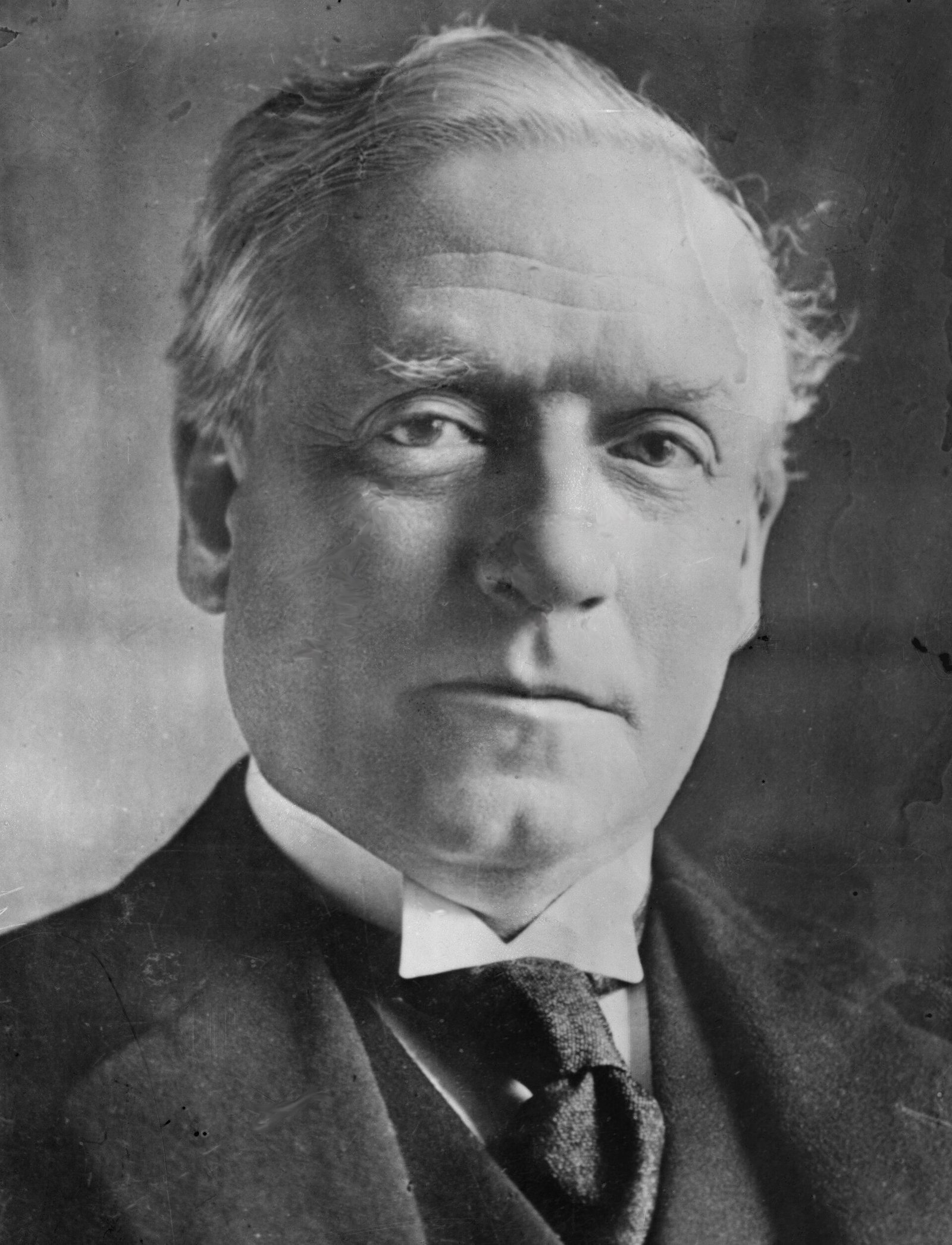
Herbert Henry Asquith was born at Croft House in Morley in 1852, the son of a local wool merchant. Educated away from the town after his father’s early death, he rose through the Liberal Party to become Home Secretary — in which role he returned in 1895 to open Morley Town Hall — and then Chancellor of the Exchequer, introducing the first old-age pensions. From 1908 to 1916 he was Prime Minister, leading Britain into the First World War.
Asquith is not Morley’s only famous birth. Titus Salt, the mill owner who built the model village of Saltaire, was born in Morley in 1803; and Helen Fielding, creator of Bridget Jones, was born here in 1958. The women’s rights campaigner Alice Cliff Scatcherd gave the town Scatcherd Park, where she now lies buried in St Mary’s churchyard.
Before the mills · Hall, war and weavers
In the 1580s Sir John Savile of the great Yorkshire Savile family built Howley Hall, a grand house on the town’s edge. During the Civil War it was besieged in 1643, in the campaign that led to the Battle of Adwalton Moor nearby — one of the decisive battles of the war in the north. The hall survived the siege but fell into ruin and was demolished in 1730; its cellars and fragments can still be found. Below the gentry, Morley’s people worked as handloom weavers, clothiers and quarrymen in a landscape of small farms and early coal pits — the raw material of the boom to come.
1086 · Morelege
Morley enters written history in the Domesday Book of 1086, recorded as Morelege, Morelei and Moreleia. The name comes from Old English mōr (moor) and lēah (open ground, a clearing): “the open ground by the moor”. The settlement was significant enough to give its name to the surrounding wapentake — the Viking-era district whose assembly met at nearby Tingley. A thousand years later, Morleians are still known for doing things their own way.
Photographs via Wikimedia Commons (CC BY / CC BY-SA); the Asquith portrait is public domain. Sources include Morley Community Archives, Historic England and the UK census.