Some towns grew around a castle, a mill or a mine. Wetherby grew around a road. For centuries it has stood on the River Wharfe at the halfway point of the Great North Road between London and Edinburgh — a crossing place, a staging post and a market for everyone passing through. Coaches, cattle drovers, armies and Hollywood stars have all stopped here; the town got rather good at feeding them.
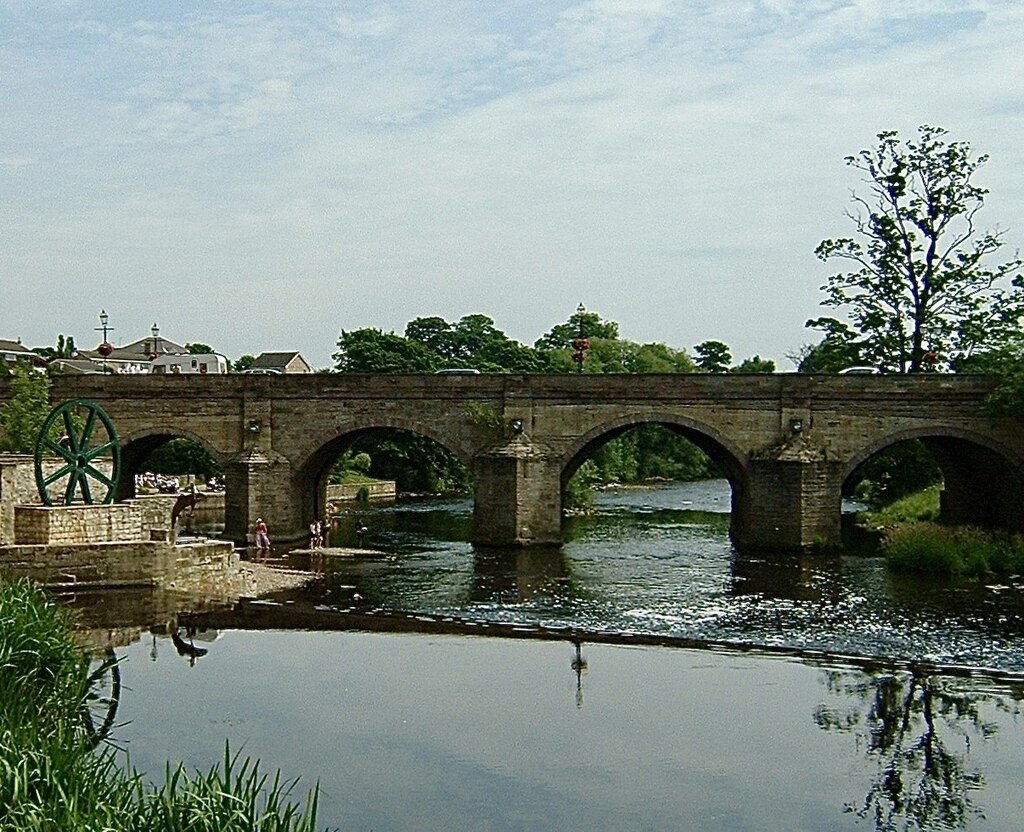
Wetherby today
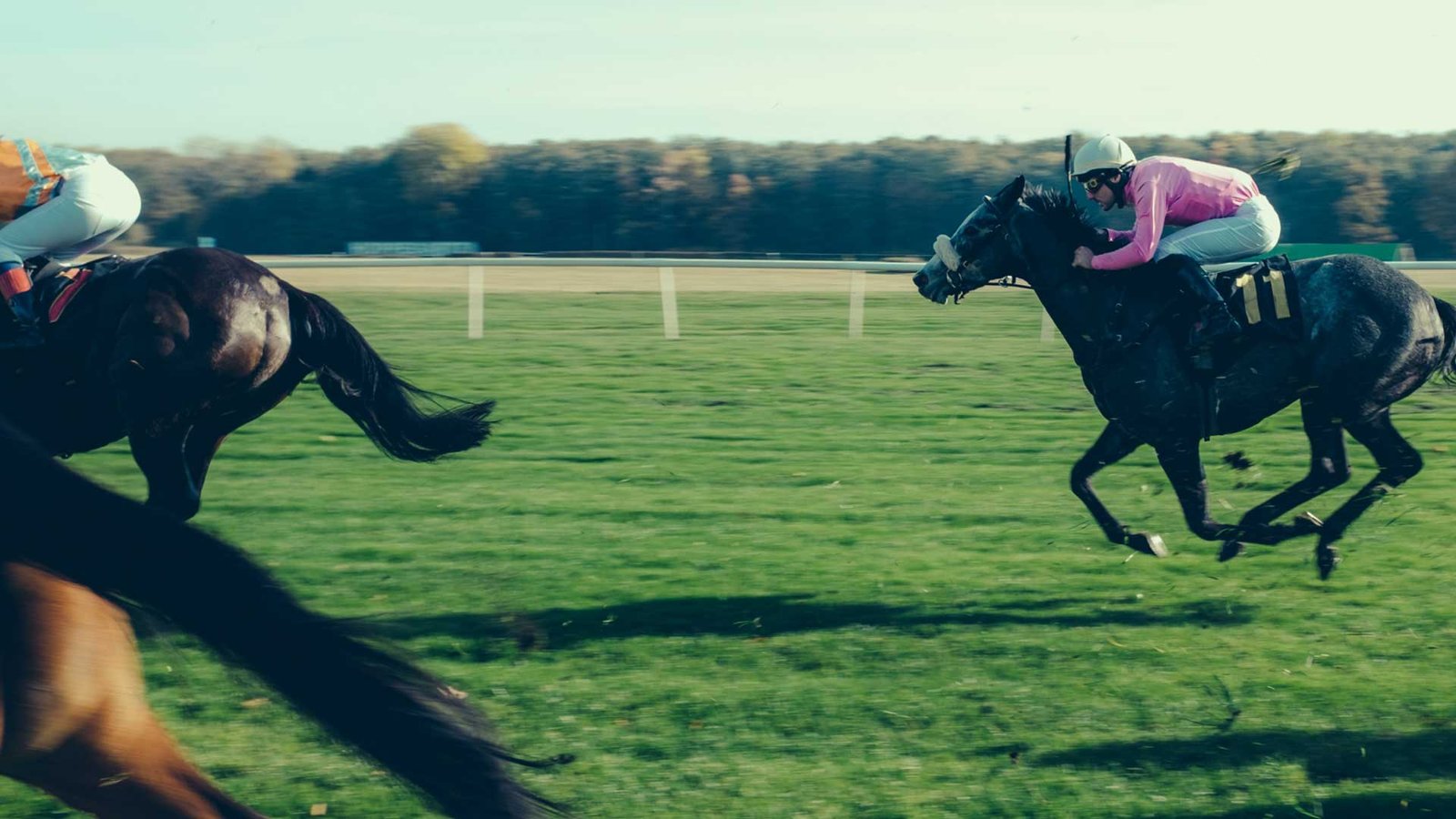
Wetherby’s population was 11,712 at the 2021 census. The Sunday Times listed it among the Best Places to Live in Northern England in 2018. Its racecourse is one of Britain’s premier steeplechase tracks, drawing crowds from across the North through the jumping season. The town’s unlikely industrial hero is Goldenfry, which began as a fish and chip shop and now makes own-brand gravy for every major UK supermarket. The town council still bears the motto of the old rural district: Imperium in Imperio — “a government within a government”.
Two wars, a film star and a stone frigate
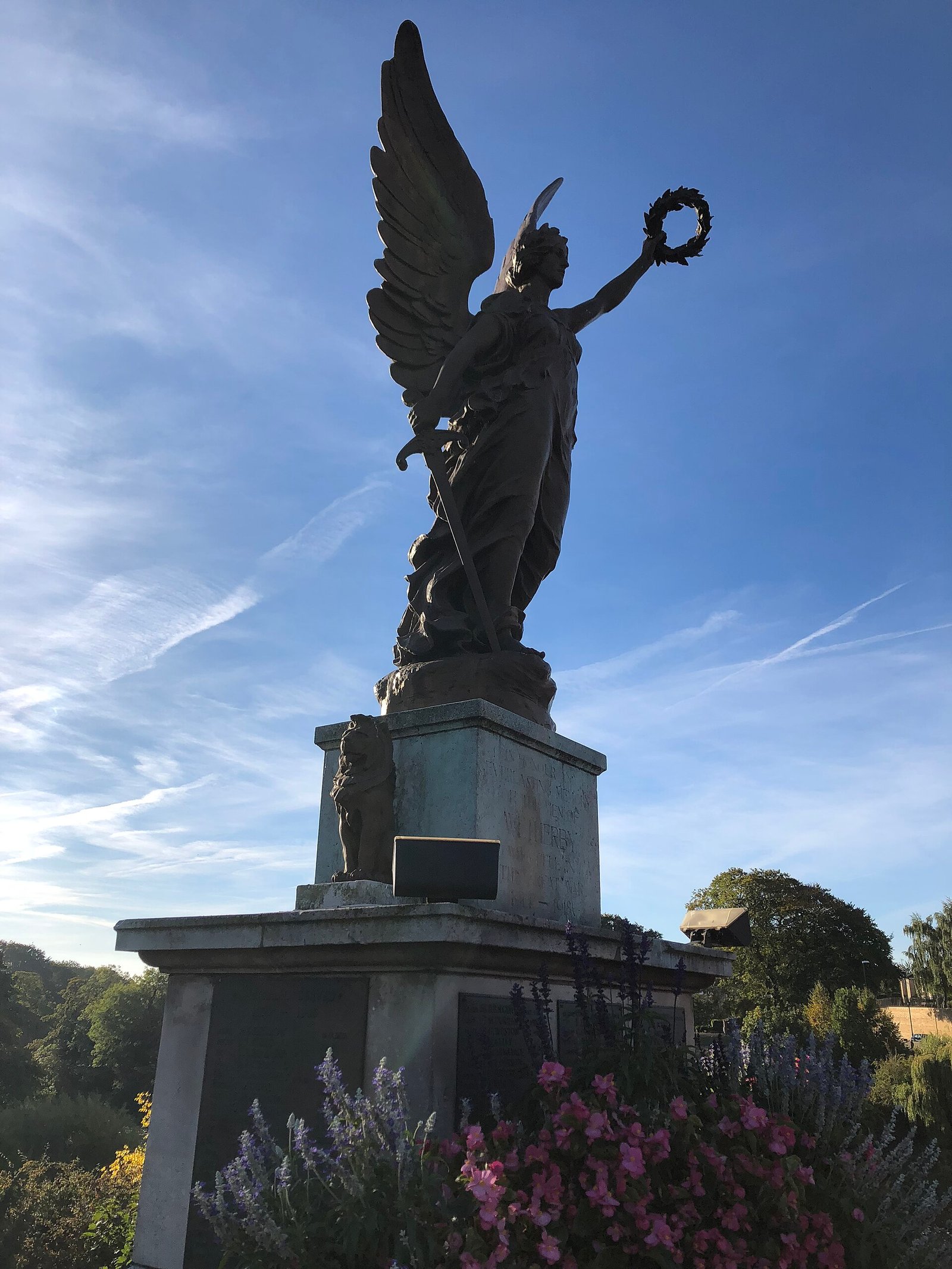
Wetherby’s First World War men served mainly with the 5th and 9th Battalions of the West Yorkshire Regiment, which suffered heavily in Flanders. Their memorial — a winged figure of Victory — stands in an unusual place: on the bridge itself, dedicated on 22 April 1922, watching over every traveller who crosses the Wharfe. In 1918 the townspeople had also supported the crew of the minesweeper HMS Wetherby, despite wartime shortages.
The Second World War brought strangers of a different kind. At nearby RAF Marston Moor, Clark Gable served as a USAAF captain — Adolf Hitler reportedly offered a reward to anyone who captured him. Group Captain Leonard Cheshire was also stationed there briefly before leaving to command the Dambusters’ 617 Squadron. In the town itself, the Royal Navy ran the only “stone frigate” north of London on Hallfield Lane (from 1942, later HMS Ceres; the site is now the high school), while the Angel Inn quietly served German and Italian prisoners of war from the nearby camps — the only pub in town that would — and took the controversy that came with it.
1824 · The town that was sold
In 1824, Wetherby changed hands wholesale. William Cavendish, 6th Duke of Devonshire — “the Bachelor Duke” — sold the entire town, except for one house, to raise money for his works at Chatsworth House in Derbyshire. Few English towns can say they were once a single lot in an estate sale.
The coaching age · Forty inns
Wetherby’s golden age was the age of the stagecoach. Sitting midway between London and Edinburgh on the Great North Road, and on a major route for Scottish cattle drovers walking their herds to London markets, the town at its peak supported up to forty inns and alehouses. The first recorded mail coach arrived in 1786. Scottish Lane — Scott Lane — earned its name in this world: either from the Scottish drovers who watered their cattle here, or from a much darker visit three centuries earlier (see below). The bridge that carried it all, Wetherby Bridge, is now a Scheduled Ancient Monument — one of the few working road bridges in England protected as an archaeological site.
1644 · Two days before Marston Moor
In the Civil War, Wetherby’s position on the road made it a natural mustering point. In 1644 the Parliamentarian army spent two days in Wetherby joining forces with their Scottish allies, then marched via Tadcaster to the Battle of Marston Moor — one of the largest and most decisive battles ever fought on English soil, just a few miles away.
1318 · Burned by the Scots
Three centuries earlier, the Scots had come in anger, not alliance. After Bannockburn, northern England endured years of Scottish raiding, and in 1318–19 Wetherby was burned, with many of its people killed or carried off. The blue plaque on Scott Lane records the rival theories of its name: the raiders of 1318, or the drovers of gentler centuries.
1240 · The Templars’ charter
Wetherby’s market is older than most of its buildings. The Knights Templar — whose local preceptory, founded in 1217, stood at nearby Ribston — were granted a Royal Charter by Henry III in 1240 giving them the right to hold a market in Wetherby on Thursdays, plus a three-day fair around the feast of St James the Apostle. Nearly eight centuries later, the Thursday market still fills the Market Place — one of the longest-running charters of everyday life in the town.
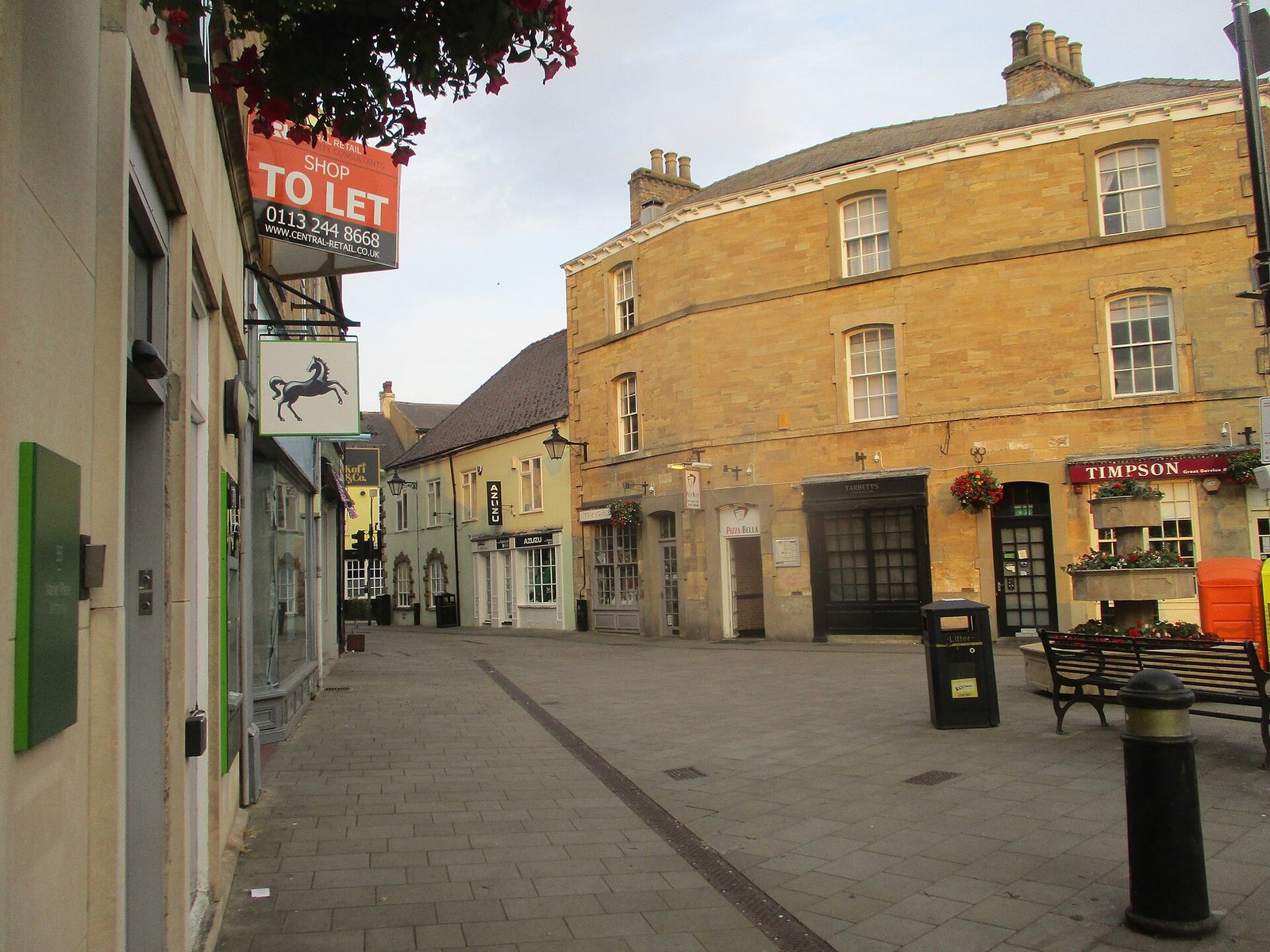
1086 · Wedrebi
Wetherby’s name is a Viking souvenir. In the Domesday Book of 1086 it appears as Wedrebi, from the Old Norse veðr — a wether, a castrated ram — and bý, a farmstead: “the wether’s farm”. Where Morley and Horsforth speak Old English, Wetherby speaks Norse — a reminder that this corner of Yorkshire once looked north to Scandinavia, and that a humble sheep farm by a river crossing became, in time, a town that hosted kings’ armies and sold itself to pay for a stately home.
Photographs via Wikimedia Commons (CC BY / CC BY-SA). Sources include Historic England’s listing for Wetherby Bridge, Wetherby Town Council and the UK census.