Two miles up the Otley Road from the city centre, Headingley is Leeds’s most storied suburb: a Viking assembly place, a Victorian millionaires’ village, a university quarter — and the home of a cricket ground where the two most famous Test matches ever played in England reached their impossible endings.
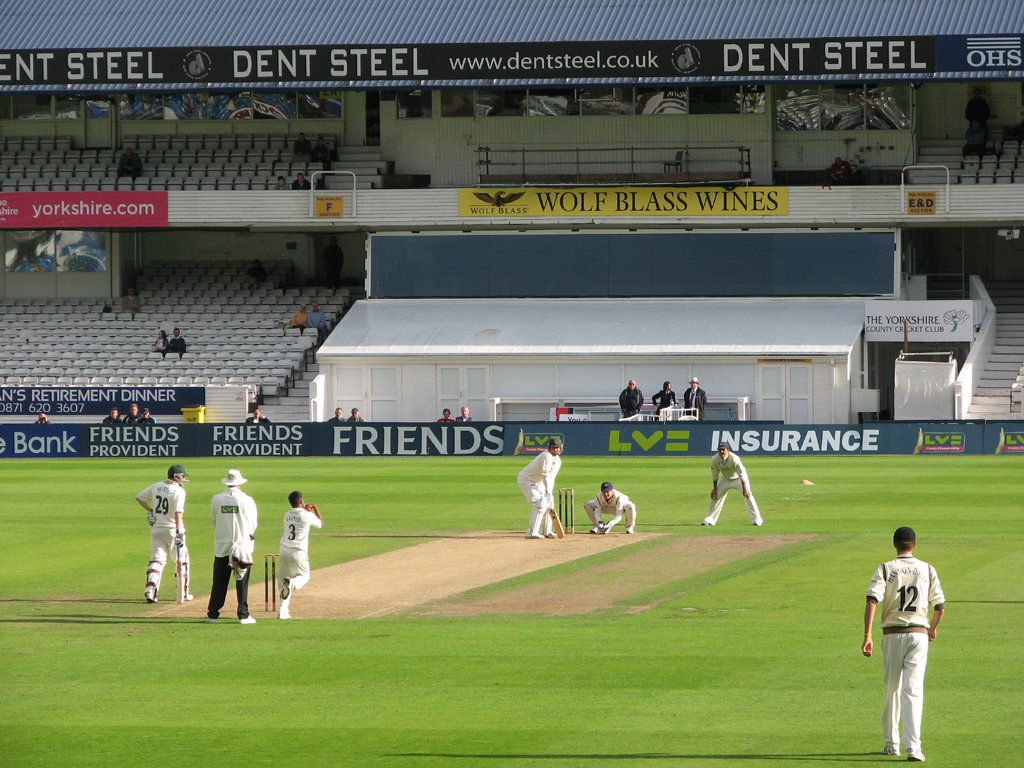
Headingley today
Headingley mixes long-settled families, the Beckett Park campus of Leeds Beckett University, and the students of two universities — a balance the community actively manages through the Headingley Development Trust (founded 2005). Its rituals are famous: the Otley Run, the fancy-dress pub crawl, starts at Woodies in Far Headingley and rolls down to the city centre; the Cottage Road Cinema (opened 1912) is among the oldest cinemas in Britain still showing films. On Test match days the whole suburb becomes a festival.
The sporting cathedral
The two grounds at Headingley Stadium stand back to back: Yorkshire cricket (here since 1890, Tests since 1899) and the Leeds Rhinos rugby league club, sharing one site. The cricket ground has staged endings no novelist would dare. In 1981, England — forced to follow on against Australia, quoted at 500–1 to lose — won, through Ian Botham’s 149 not out and Bob Willis’s eight wickets: “Botham’s Ashes”. In 2019, Ben Stokes’s 135 not out carried England to chase 359 and beat Australia by one wicket, in what many judges call the greatest Test innings ever played. Headingley does not do ordinary finishes.
Bears, and a zoo that failed
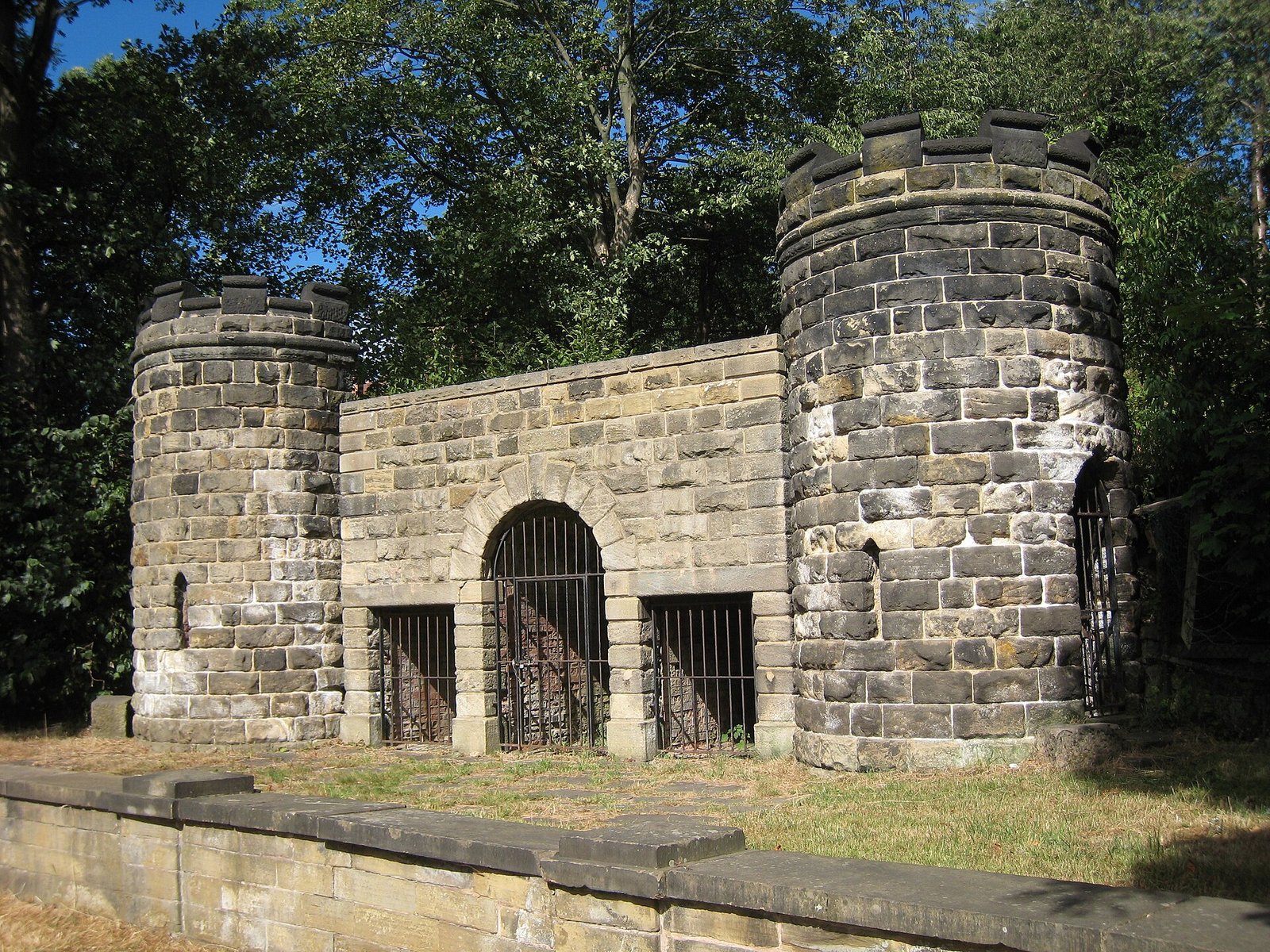
In 1840 the Leeds Zoological and Botanical Gardens opened in Headingley — peacocks, monkeys, gardens and promenades for the Victorian middle classes. Despite the new railway station (1849), the zoo lost money and closed in 1858. One relic survives on Cardigan Road: the castellated stone bear pit, where brown bears once paced in front of the crowds — now a listed monument and the suburb’s most surprising landmark.
Writers, and a prince
Headingley has housed an improbable library of talent. J. R. R. Tolkien lived here while lecturing at the University of Leeds in the years before The Hobbit; Arthur Ransome of Swallows and Amazons was born here; playwright Alan Bennett once lived over a butcher’s shop opposite the Three Horseshoes. Suffragist and writer Isabella Ford was born in Headingley in 1855. Its saddest resident was Prince Alemayehu of Abyssinia, brought to England as a boy after his father Emperor Tewodros’s defeat; he died of pneumonia at an address in Hollin Lane in 1879, still a teenager, and lies buried at Windsor.
Villas, trams and 46,000 people
In 1801 Headingley counted 300 people. The enclosure of Headingley Moor (1829) released land; the railway came in 1849; and from 1875 the Leeds tramway terminated at Far Headingley, ending the village forever. Rich merchants built villas on the hill to escape the city’s smoke, workers’ terraces filled the lanes below, and by the census of 1911 Headingley held more than 46,000 people. Land gifts in the 13th century had already given much of Headingley-cum-Burley to the monks of Kirkstall Abbey — the suburb’s second great landowner story, six hundred years before the developers.
The Shire Oak
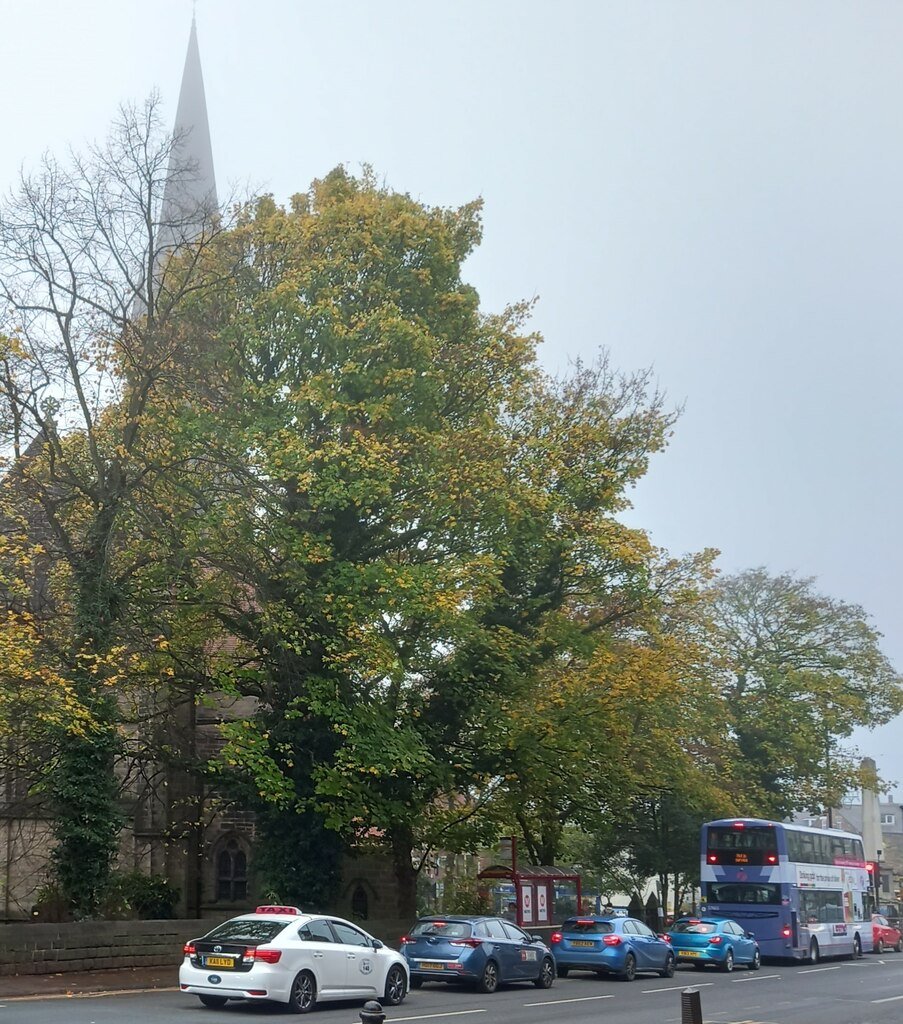
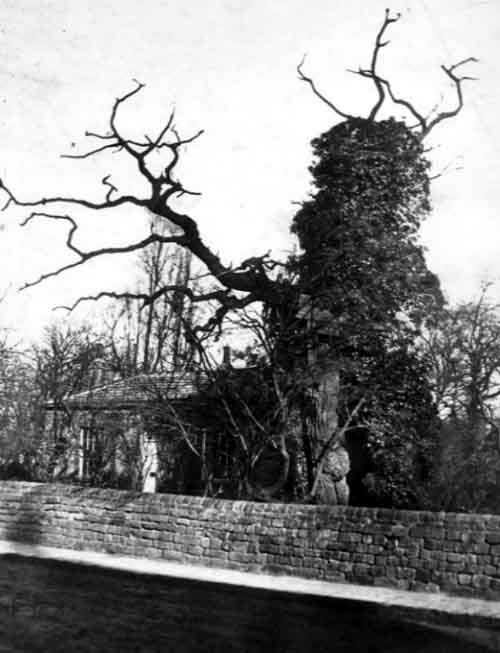
From Viking times, Headingley was the meeting place of the Skyrack wapentake — the “shire oak” district. Benevolent tradition says the wapentake’s men gathered under a great oak north of St Michael’s Church to settle disputes and muster for war. The tree — claimed as the original — stood until 1941, and still names the suburb: the Original Oak and the Skyrack, the two pubs facing each other across the road where the oak once stood, are its living memorials.
1086 · Hedingelei
Domesday records Hedingelei: from Head(d)inga and lēah — “the clearing of Hedda’s people”, a family clearing in the forest north-west of Leeds. A stone coffin unearthed near Beckett Park in 1995 hints at an even older, late-Roman settlement. From Hedda’s clearing to Botham’s and Stokes’s stadium, it is quite a journey for two square miles of Leeds.
Photographs via Wikimedia Commons (CC BY / CC BY-SA / public domain). Sources include the Headingley Development Trust, Yorkshire County Cricket Club records and the UK census.