Otley sits where the River Wharfe leaves the hills, under the steep green wall of the Chevin. It is a town of two gifts: a crossing of the river, and a ridge of gritstone above it. Between the two, Otley became an archbishop’s market town, the birthplace of the most famous furniture maker in the world, and — in the age of steam — the town that built the presses which printed half the world.
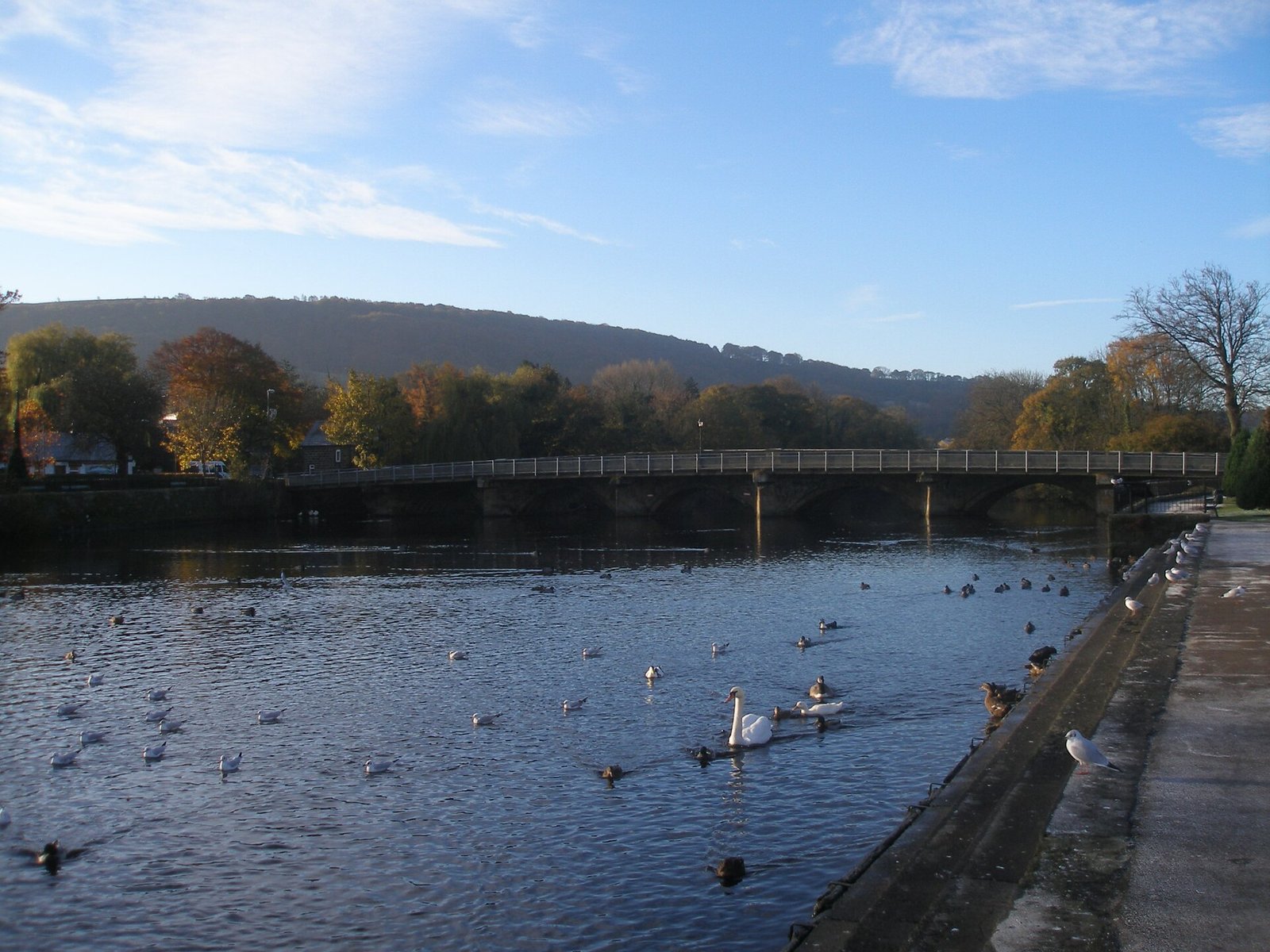
Otley today
Otley had a population of 13,669 at the 2011 census. Above the town, the Chevin Forest Park — some 700 acres of woodland and crag — belongs to the people of Otley: in 1944 Major Le G. G. W. Horton Fawkes of Farnley Hall gave 263 acres of it to the town, and it has grown since. On the riverside, Wharfemeadows Park (a gift of the Fawkes family in 1924) held an open-air lido from 1924 to 1993; a local campaign still hopes to bring outdoor swimming back. The town remains what it has been for 800 years — a market town, with market days filling the Market Place under the Jubilee Clock on Tuesdays, Fridays and Saturdays, plus a farmers’ market once a month. Television knows the streets too: Otley doubles as Hotten, the market town in ITV’s Emmerdale. Since 1974 the town has been part of the City of Leeds, though it keeps its own town council. Its best-known modern export rides a bike: Lizzie Deignan, born in Otley in 1988, took silver in the London 2012 Olympic road race and won the world road race title in 2015.
The town that printed the world
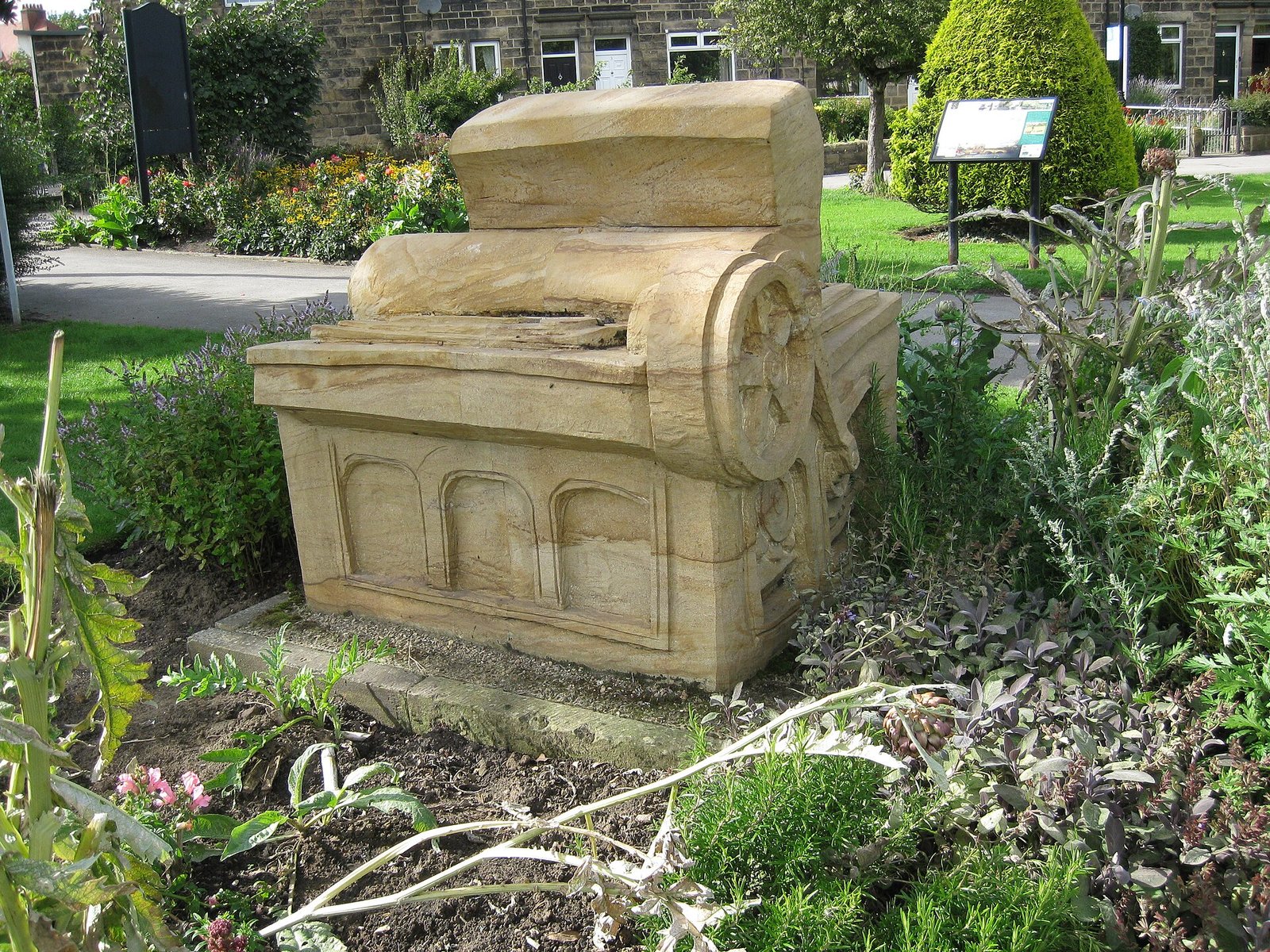
In 1858 two Otley engineers, William Dawson and David Payne, built the first Wharfedale stop-cylinder press — a fast, reliable printing machine that became a global standard, exported from Otley workshops to newspaper and jobbing printers on every continent. By 1900 the printing-machine trade employed more than 2,000 people in seven machine shops and was the town’s biggest industry. The railway arrived in 1865 (at its peak 50 trains a day called at Otley; Beeching closed the line in 1965), and the mills by the river — worsted, paper, a tannery — filled the valley floor. The last printing works closed in 1981, but Otley keeps the memory in stone: a carved Wharfedale press stands in Wharfemeadows Park, and the town museum holds one of the original machines.
1718 · Thomas Chippendale
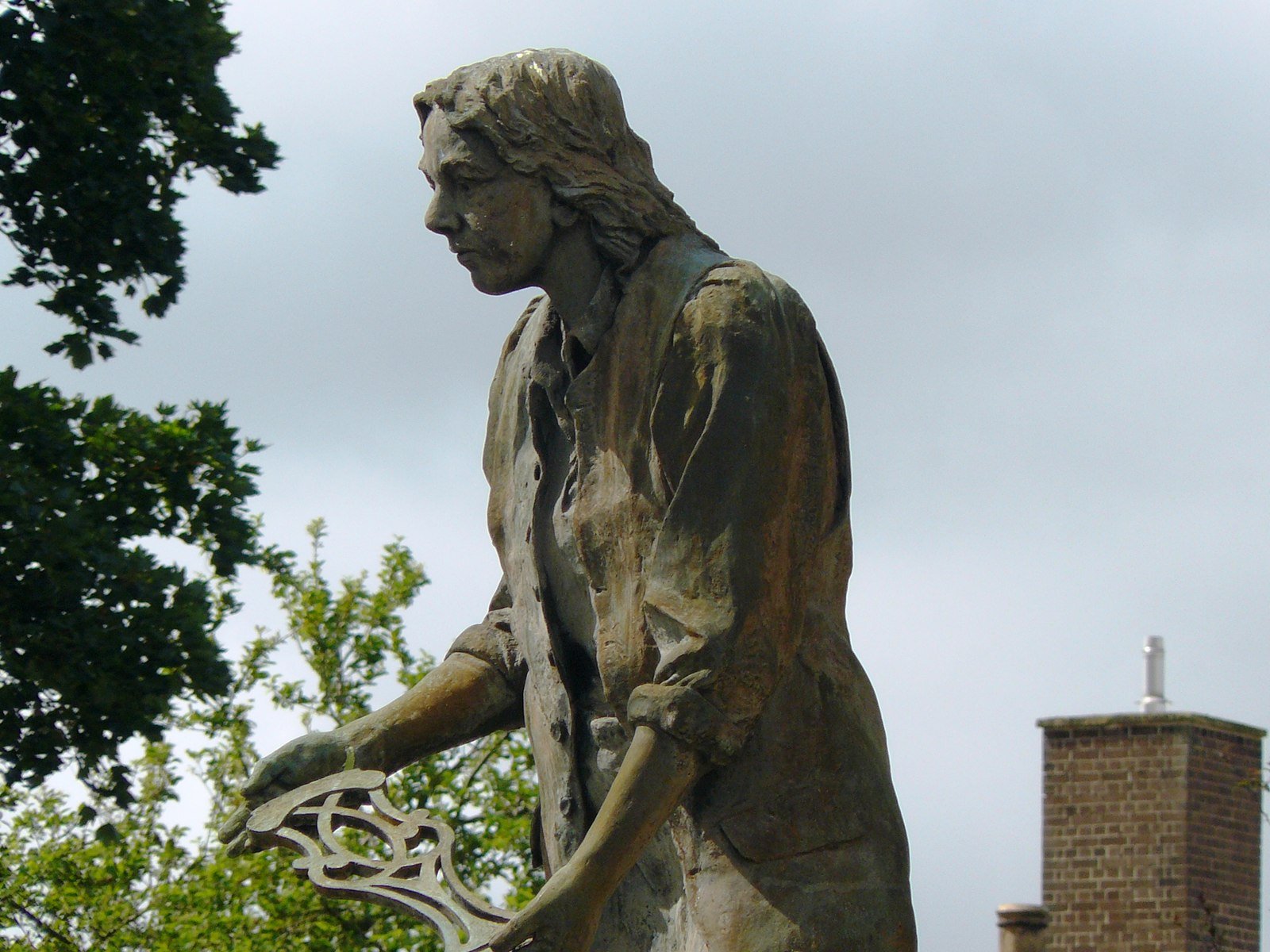
Otley’s most famous son needed no machines. Thomas Chippendale, born in the town in 1718 and baptised at the parish church, became the most celebrated cabinet-maker of the Georgian age — his 1754 pattern book, The Gentleman and Cabinet-Maker’s Director, shaped elegant furniture across Britain and America, and “Chippendale” became a style, a byword and eventually a common noun. A statue of the young craftsman at his bench stands in the town; the master joiner from a Wharfedale market town now names furniture on every continent.
1227 · The bridge, the clock and the market
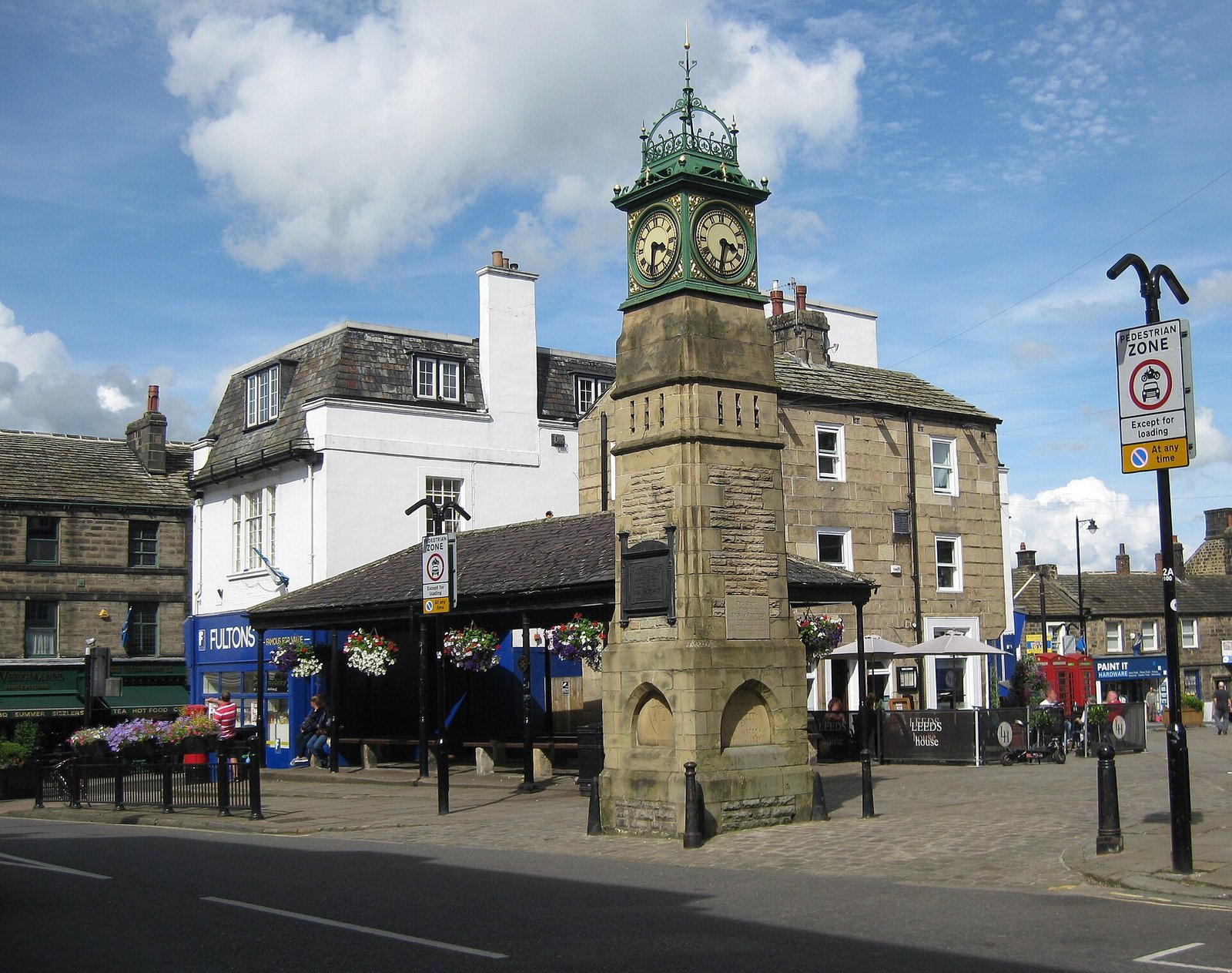
Otley Bridge — seven stone arches — dates from 1228; it was rebuilt after a great flood in 1673 and widened in 1776, and is now a Scheduled Ancient Monument. Markets have been held in the town since at least 1227, moving to the present Market Place around 1800. The Jubilee Clock was erected in 1888 for £175; among its plaques is one of gratitude from Belgian refugees who sheltered in Otley during the First World War, and one to two local men killed in the Boer War. The stone canopy beside it is the Buttercross, where farmers once sold their produce.
The archbishops’ borough
Otley’s medieval shape was drawn by the Archbishops of York. King Æthelstan had granted the great manor of Otley to the see of York, and the archbishops made the town a residence — their palace stood where the Manor House stands now (its remains turned up when a primary school was built). In the 1200s the archbishops laid out burgage plots to lure merchants and craftsmen, and the triangle of streets they drew — Boroughgate, Walkergate, Kirkgate — is still the street plan of the town centre today. Bondgate, beyond, housed the bondsmen and tenants; a leper hospital stood on the Harewood road.
972 · Ottanlege
The name is recorded as Ottanlege in 972 and Otelai in the Domesday Book: Otta’s lēah, a Saxon settler’s woodland clearing. The parish church keeps physical proof of that Saxon settlement: shafts of three Saxon crosses, the oldest fragments dated to around 750 AD, found built into the church walls during its Victorian restorations. The ridge above keeps an older witness still. Chevin matches the early Brythonic word cefn, “ridge” — quite possibly a survival of the language of Elmet, the British kingdom that held this valley before the English came.
The Chevin’s deep past
Long before Otta, the ridge was busy: Palaeolithic flint tools, Iron Age earthworks and Bronze Age carvings — cup-and-ring marked rocks such as the Knotties Stone — are scattered across the Chevin’s top. Medieval quarries on the ridge supplied building stone and millstones; much later, a Chevin quarry provided the foundation stones of the Houses of Parliament. The hill that Bronze Age families carved with symbols now looks down on rowers, market stalls and the town it has watched for five thousand years.
Photographs via Wikimedia Commons (CC BY / CC BY-SA). Sources include Historic England, Otley Town Council, Otley Museum and the UK census.