Pudsey sits on the ridge of high ground exactly midway between Leeds and Bradford — close enough to both to be claimed by each, and stubborn enough, for most of its history, to belong to neither. It is a wool town, a cricket town, and the town whose name, every November, is on television screens across Britain.
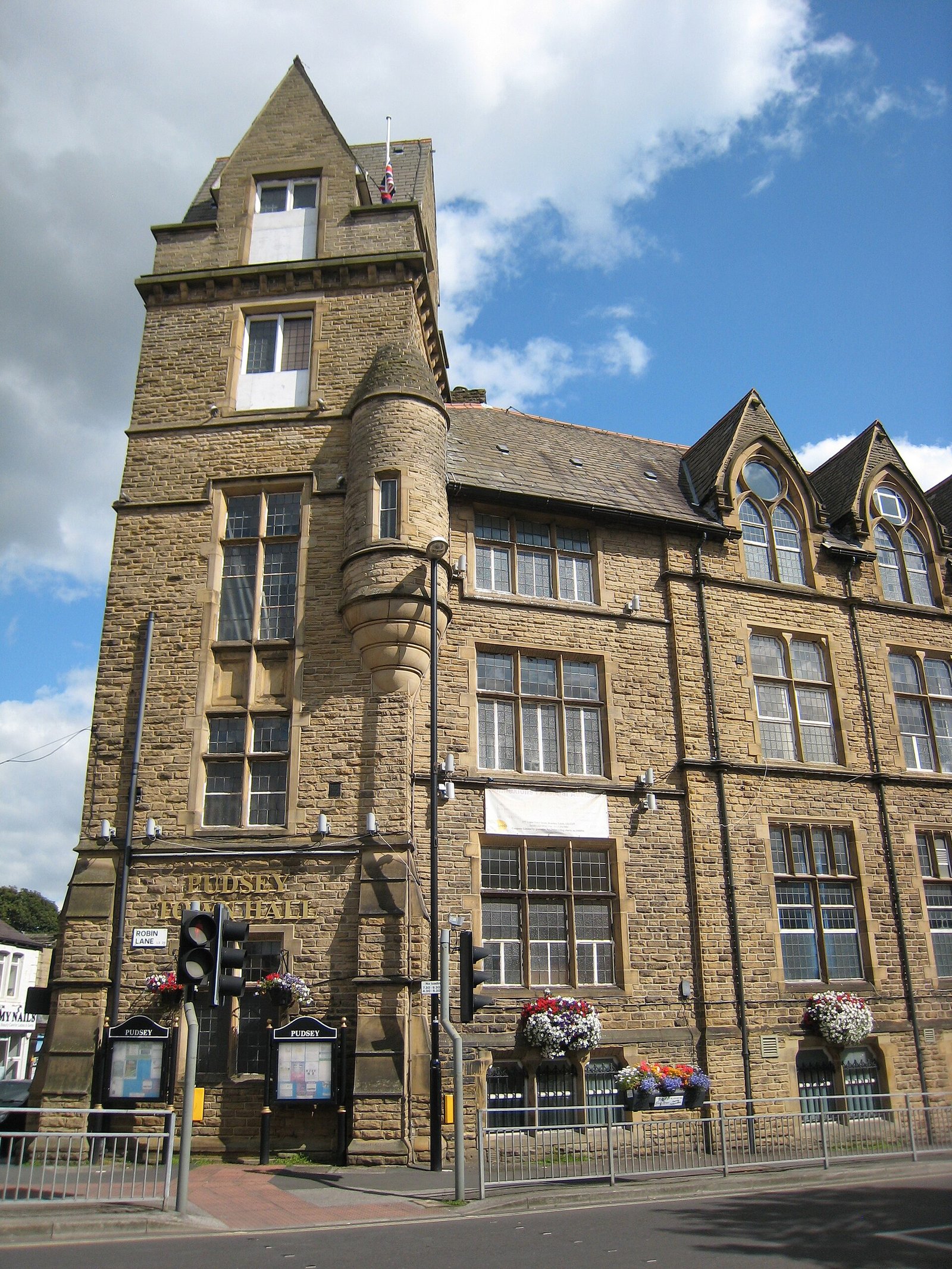
Pudsey today
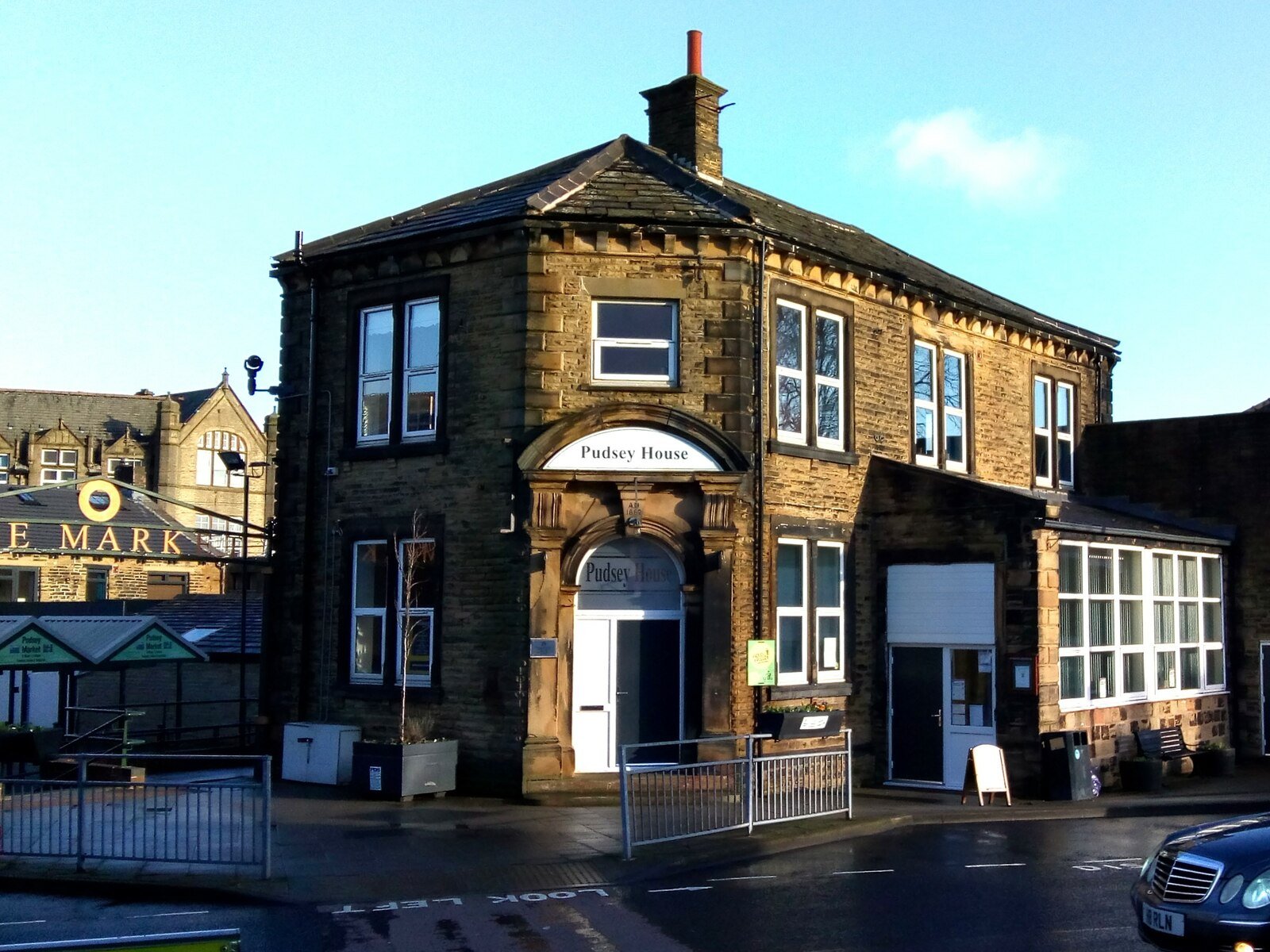
Pudsey’s population was 25,393 at the 2021 census — the largest of Leeds’s old satellite towns after the city itself. Its market still runs on Tuesdays, Fridays and Saturdays, with a monthly farmers’ market; Pudsey Park, opened in 1889, is the town’s green heart. The town’s own loop-line stations, Lowtown and Greenside, closed under Beeching in 1964; New Pudsey station, opened in 1967 on the Leeds–Bradford line just over the boundary in Farsley, makes Pudsey a commuter town for both cities. Within the town lies Fulneck, the Moravian settlement founded in 1744: its school educated Benjamin Henry Latrobe, who emigrated to America and became the architect of the United States Capitol.
The bear
Ask a Briton about Pudsey and the first image is a one-eyed yellow bear. Pudsey Bear, the mascot of the BBC’s Children in Need appeal since 1985, was named after this town: BBC designer Joanna Ball named her creation for her home town — the place where her grandfather had been mayor. The town keeps a bear of its own in return: a giant Pudsey picked out in planting stands in Pudsey Park. Every November, Pudsey’s name fronts one of the biggest charity telethons in the world — not bad for a town of twenty-five thousand.
Cricket town
If the bear is Pudsey’s famous face, cricket is its famous game. Herbert Sutcliffe, Sir Len Hutton — “the man from Pudsey”, born at Fulneck, England captain and one of the greatest batsmen who ever lived — fellow England captain Ray Illingworth and fast bowler Matthew Hoggard all learned their cricket here. For over a hundred years Yorkshire County Cricket Club never lacked at least one player from the old Borough of Pudsey. Pudsey St Lawrence, founded in 1845, has won the Bradford League ten times; Pudsey Congs carries the town’s other colours. Few towns anywhere have produced two England captains.
The smokiest town in England
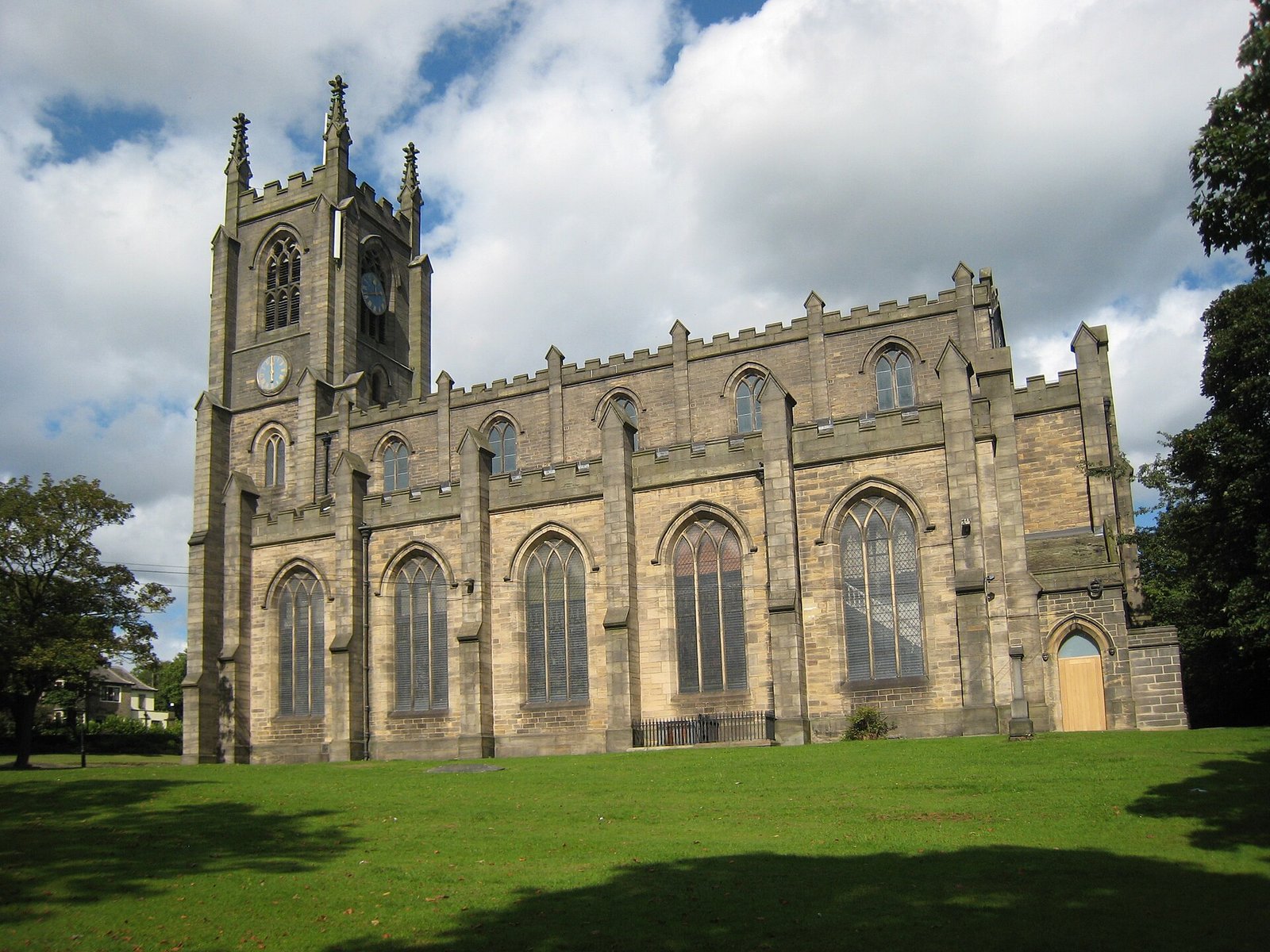
Pudsey made its money from wool — and paid for it in soot. Its mills — Union Bridge Mill among them — and workshops gave it note in the 18th and 19th centuries as a centre of woollen manufacture, but the town sits in a hollow between two great industrial cities, and smoke from Leeds and Bradford alike drifted down onto it with almost every wind. In the Industrial Revolution Pudsey was notorious as one of the most polluted towns in Britain, its stone blackened by a permanent pall. The mills are gone; the cleaned sandstone of the town centre shows what the soot was hiding.
The borough that said no
Pudsey guarded its independence with unusual success. It formed an Urban District in 1894 and became a municipal borough around 1901 — tradition holds that its charter was the last granted by Queen Victoria. Swollen in 1937 by Farsley and Calverley, it repeatedly refused absorption into the County Borough of Leeds, and only joined the city in the national reorganisation of 1974. The town hall’s clock tower still stands as the monument of that stubborn century.
A Roman hoard at King Alfred’s Camp
Around 1775, workmen on Pudsey Common unearthed a cache of one hundred silver Roman coins — many of them struck before the time of Julius Caesar — at a spot traditionally called “King Alfred’s Camp”. Who buried a hoard of republican silver on a Yorkshire common, and why they never came back for it, remains Pudsey’s oldest unsolved mystery.
1086 · Pudoc’s island
In the Domesday Book the town is Podechesai — most likely “Pudoc’s island”, where the island is a metaphor: a patch of good, dry ground amid the moorland. Before the English, this district belonged to the British Kingdom of Elmet, which kept its Celtic character for perhaps two centuries after its neighbours had gone over to the Angles. An island in the moor, midway between two cities that did not yet exist — Pudsey has been standing its own ground ever since.
Photographs via Wikimedia Commons (CC BY / CC BY-SA). Sources include the BBC’s history of Pudsey Bear, Leeds City Council’s Pudsey conservation appraisal and the UK census.