Rothwell stands between Leeds and Wakefield — and in 1974 it very nearly chose Wakefield. This is a town of coal and kings, of rhubarb sheds and railway pioneers, whose front gate is an arch made from the jawbones of a whale.
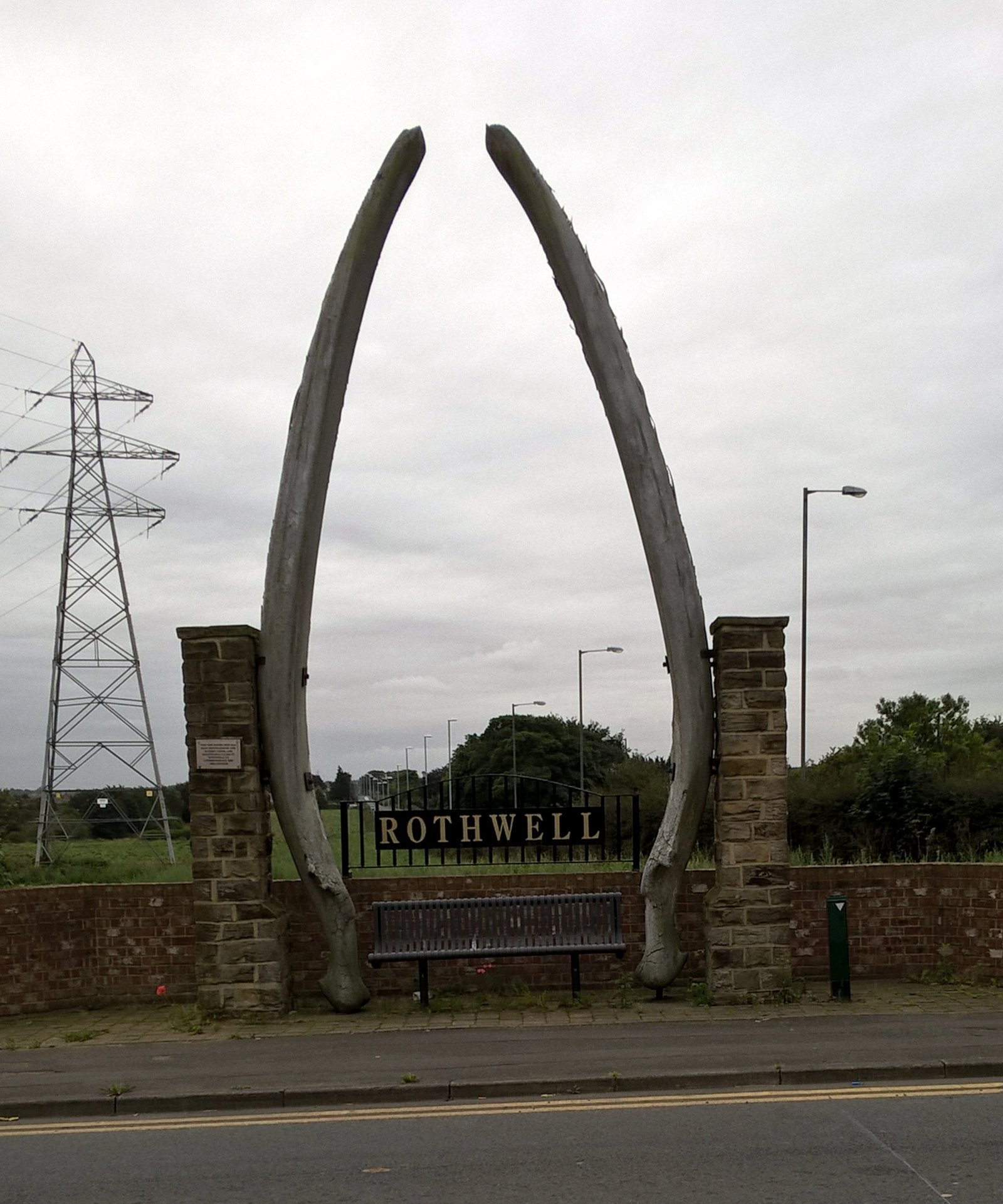
Rothwell today
Rothwell’s population was 20,600 at the 2021 census. Springhead Park hosts the annual carnival — heir to the town’s twice-yearly medieval fairs — and May Day is still marked at the stone cross. The jawbone arch, renewed over the generations, still greets arrivals from Leeds. Next door at Oulton stands Oulton Hall, now a hotel with the North’s only five-star golf resort. Among Rothwell’s modern heroes are fundraiser Jane Tomlinson, who raised over £1.5 million for charity while terminally ill, and the chart-topping band The Pigeon Detectives.
1974 · The town that nearly left Leeds
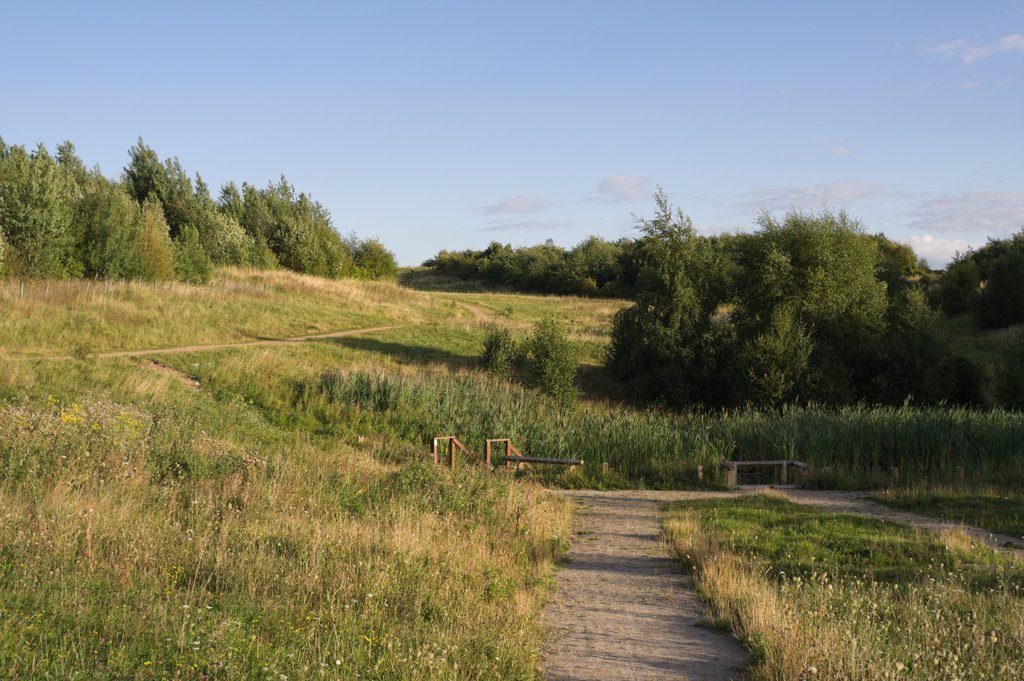
When the 1972 Local Government Act redrew the map, Rothwell campaigned to be placed in the Wakefield district, not Leeds. The campaign won: an amendment putting Rothwell in Wakefield was actually passed by the House of Commons — and then overturned by the House of Lords. The town that had run itself as an Urban District since 1894 (its town hall dates from 1895) became part of the City of Leeds by a peers’ vote, against its own campaign. Half a century on, Rothwell sits in the “Wakefield and Rothwell” parliamentary seat — a compromise written into its very constituency name.
Six hundred years of coal
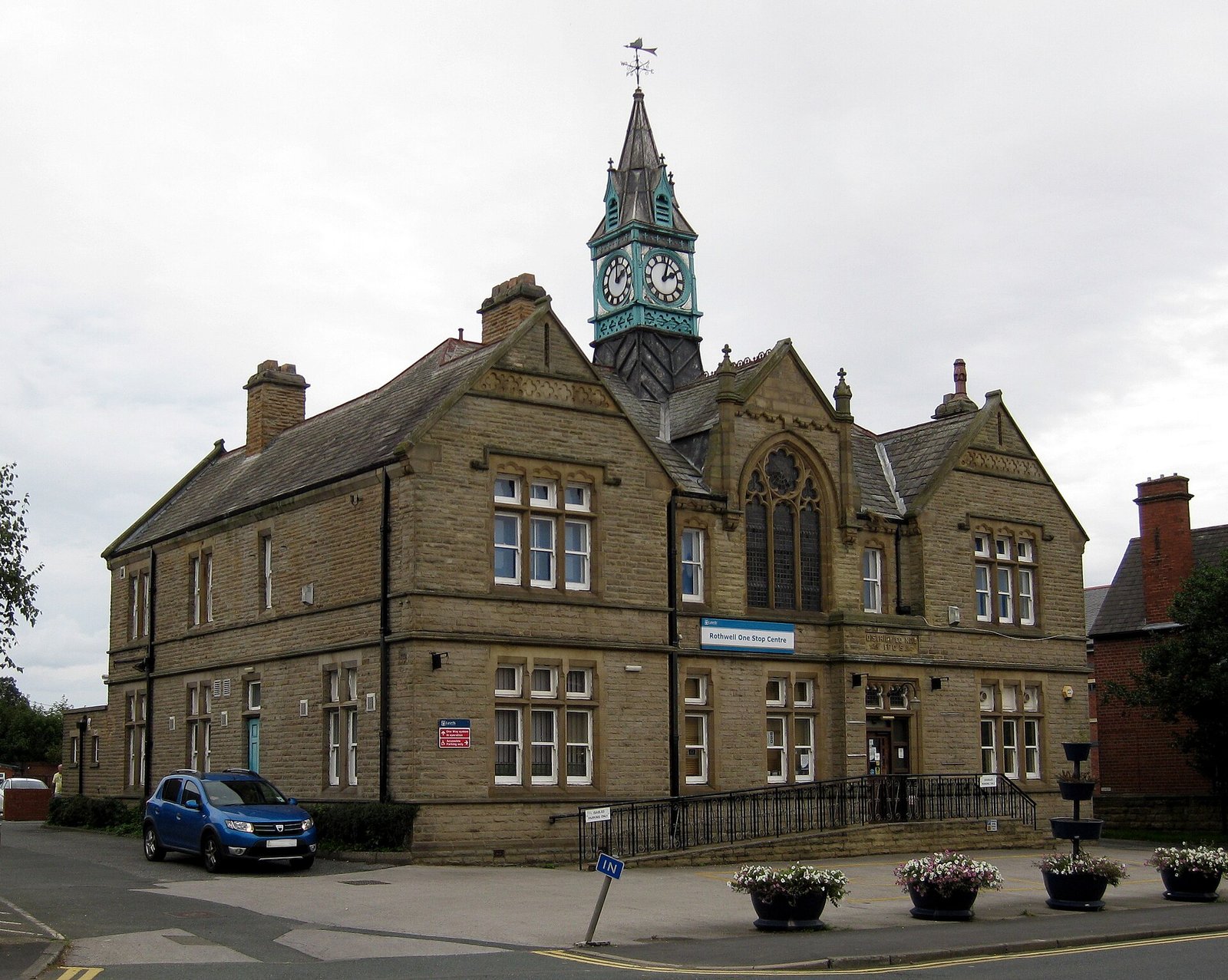
Coal has been dug around Rothwell for over 600 years — the earliest workings were bell pits, shallow shafts bellied out at the bottom. The named pits of the deep-mine age — the Fanny, the Rose, Rothwell Water Haigh — employed generations. The end came on 9 December 1983, when Rothwell Haigh Colliery stopped production and most of its 650 men transferred to the new Selby Coalfield; for years afterwards, buses of Rothwell miners commuted daily to Selby. In 1995 the Haigh site was reborn as Rothwell Country Park: 124 acres of ponds, meadows and sculpture trails where the pit once stood — the town quite literally walking on its coalfield.
The Rhubarb Triangle
Rothwell’s second crop was stranger than coal. It stands in the Rhubarb Triangle between Leeds, Wakefield and Morley, whose forcing sheds — dark, warm barns where rhubarb crowns were grown by candlelight, so tender they say you can hear it creak as it grows — once produced 90% of the world’s winter-forced rhubarb. Trains ran nightly to London’s markets. A few growers keep the tradition alive in the triangle today, and its forced rhubarb now holds protected status.
The locomotive pioneer in the churchyard
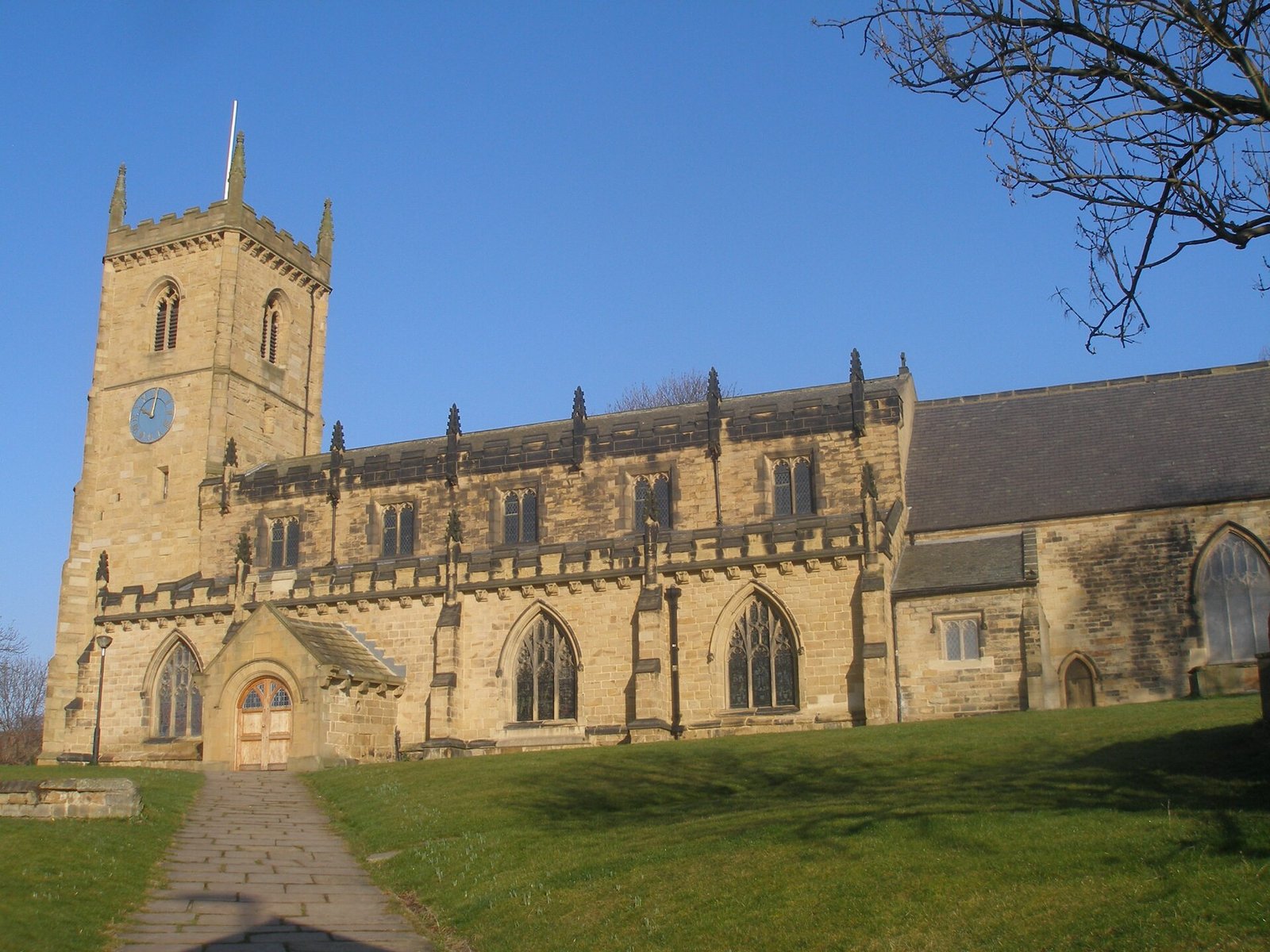
In Holy Trinity’s churchyard lies John Blenkinsop (1783–1831), manager of the nearby Middleton Colliery, who patented the rack-and-pinion system that let steam locomotives haul coal on the Middleton Railway from 1812 — the world’s first commercially successful steam railway, running into Leeds, a city Rothwell’s coal helped to build. The church itself stands on an Anglo-Saxon site; its tower is 15th-century, its ring of eight bells still sounds over the town.
The last wild boar
Rothwell was once a royal hunting address. Its lodge belonged, among others, to John of Gaunt, Duke of Lancaster, son of Edward III and the most powerful man in England — who is said, on a hunt nearby, to have killed the last wild boar in England. The boar’s head was still worn in the arms of Rothwell’s Urban District Council seven centuries later. In the 15th century the town won market rights and its twice-yearly fair — the fair that survives, transformed, as today’s carnival.
1086 · Rodewelle
The Domesday Book writes the town as Rodewelle, from the Old English roðwella — “the spring in the clearing”. A spring, a clearing, then a church, a king’s lodge, a market, six centuries of coal and a forest of rhubarb: Rothwell’s history is the whole West Yorkshire story in one town — including the near-escape, in 1974, from joining Leeds at all.
Photographs via Wikimedia Commons (CC BY / CC BY-SA). Sources include the BBC’s Rothwell colliery history, Historic England’s entry for Blenkinsop’s gravestone and the UK census.